Porkopolis
Anthropological analysis of industrial piggeries.
In the book Porkopolis, the “Industrial Pig” is a being that binds and organizes the socio-ecological worlds of both the book’s subjects and its readers.
Alex Blanchette’s compelling ethnography centers on a factory farm in an unspecified town in the United States’ Midwest. Home to one of the densest populations of Sus scrofa in the world, the factory kills up to 20,000 pigs every day. Rejecting the notion that North America is post-industrial, Blanchette explores how concepts and practices of industrialization are finding novel ways of extracting profit from human and pig bodies by redefining “animality” and inventing new forms of interspecies labor and relations. Blanchette’s examination of the conceiving, raising, and killing of pigs deftly highlights how this process is both founded on and performs divisions in class, race, and gender.
Porkopolis’ sober analysis of human and pig entanglement defies simple tropes of domination, objectification, and alienation. While the author’s ethical and political commitments are not explicitly brought to the fore until the final chapters, the detailed ethnographic description of laboring bodies within industrial capitalism speaks for itself. Porkopolis reveals a project deeply troubling in its scale, imagination, and treatment of pigs and humans alike.
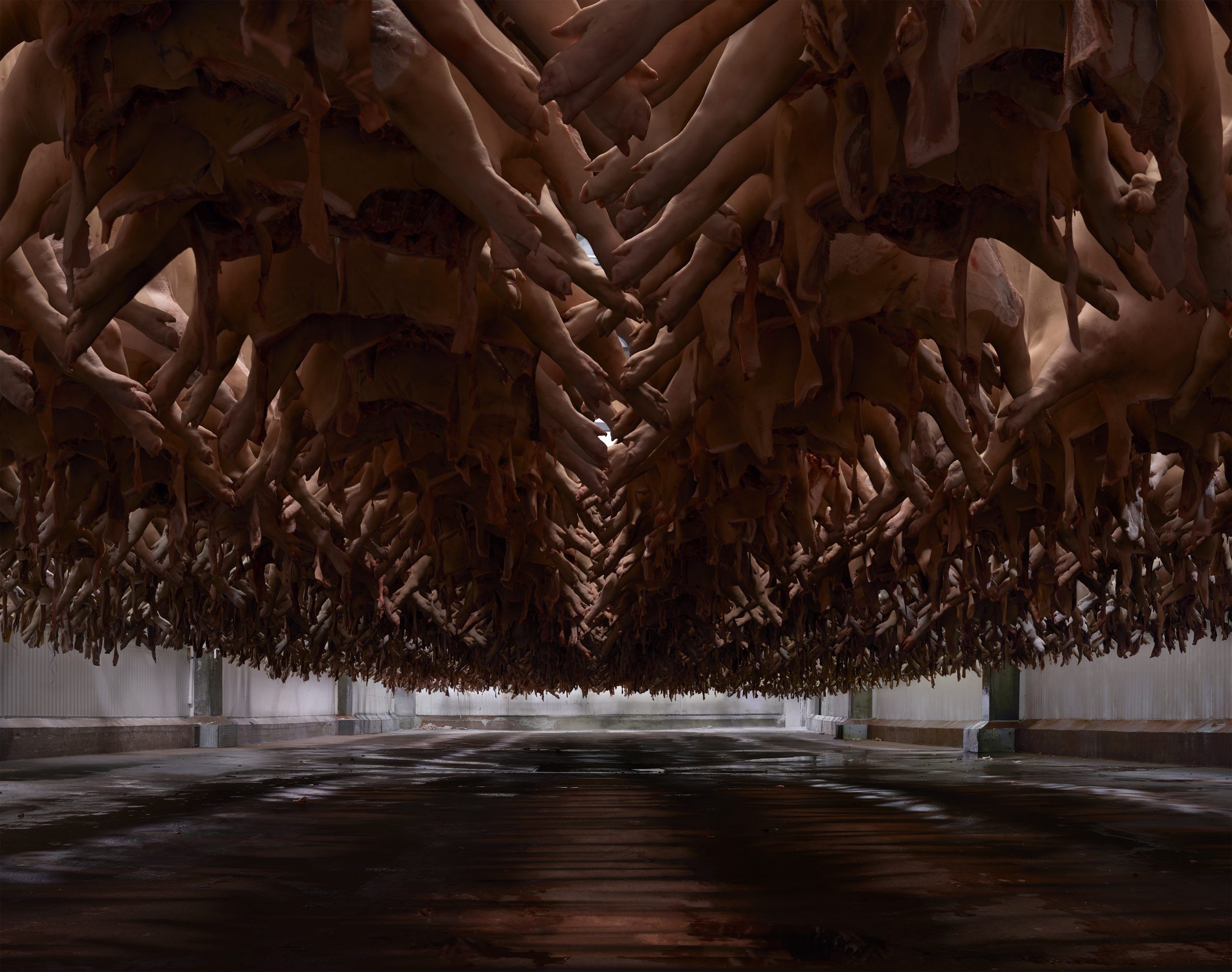
Blanchette's ethnography is supported by the uncanny and moving photography of Sean Sprague. Copyright of Sean Sprague. All rights reserved.